article3 (3)

What Is a Capsule House? A Practical Guide for Resort Projects

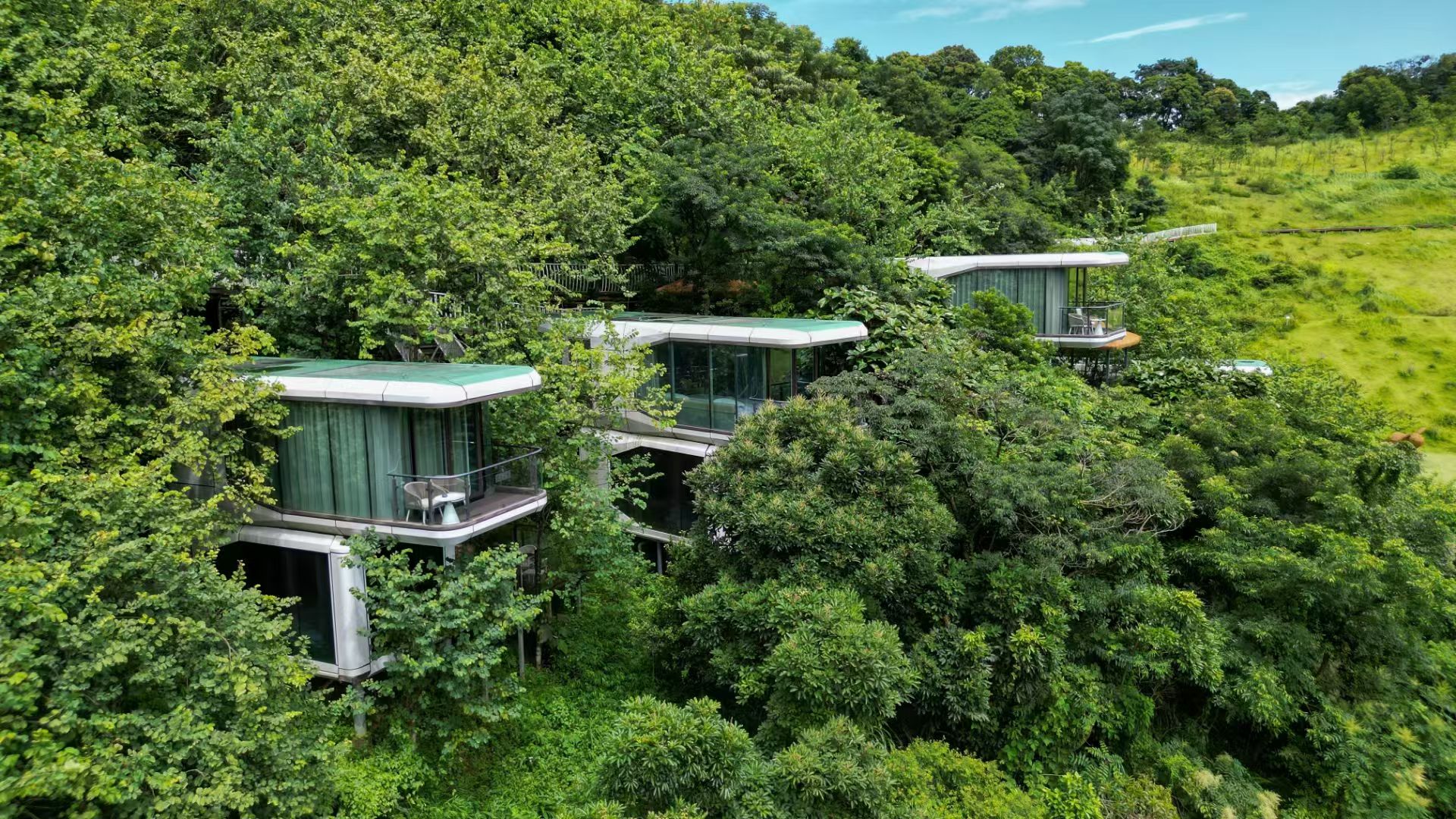
People often discover capsule houses because of their appearance. For resort and hospitality projects, the more important questions are practical: how much space does the unit provide, what is included, how is it installed, and how much does it cost?

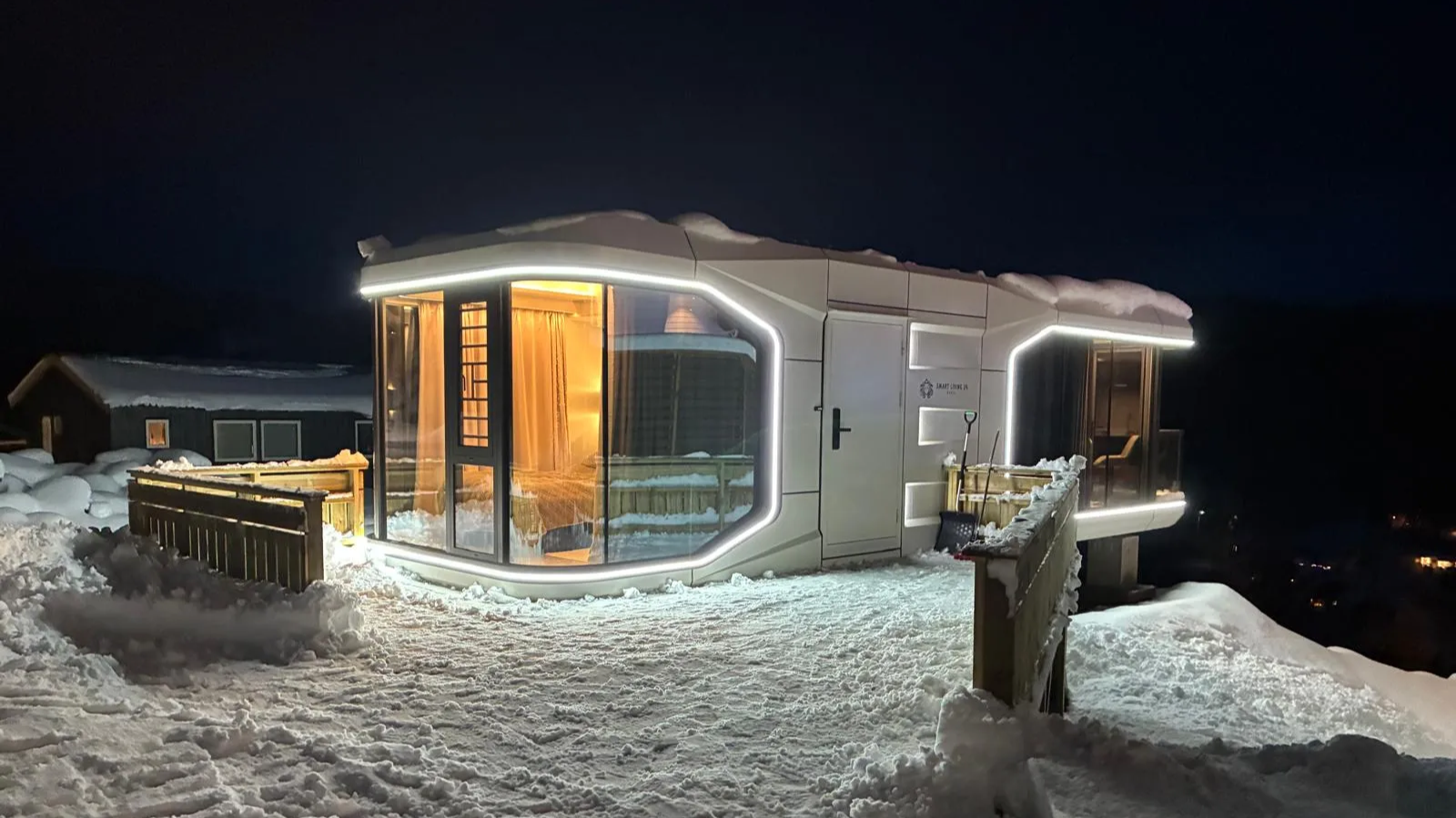
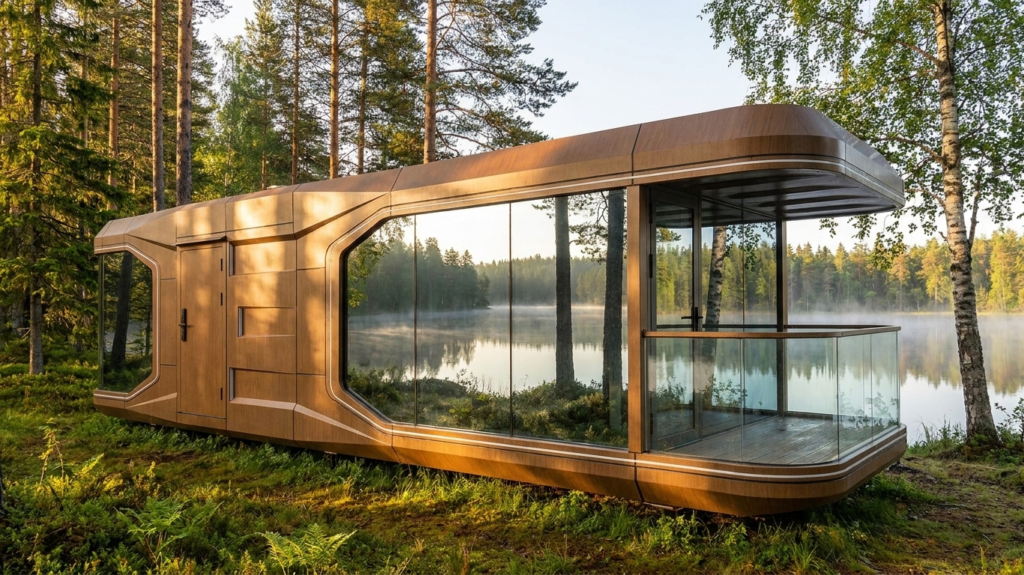
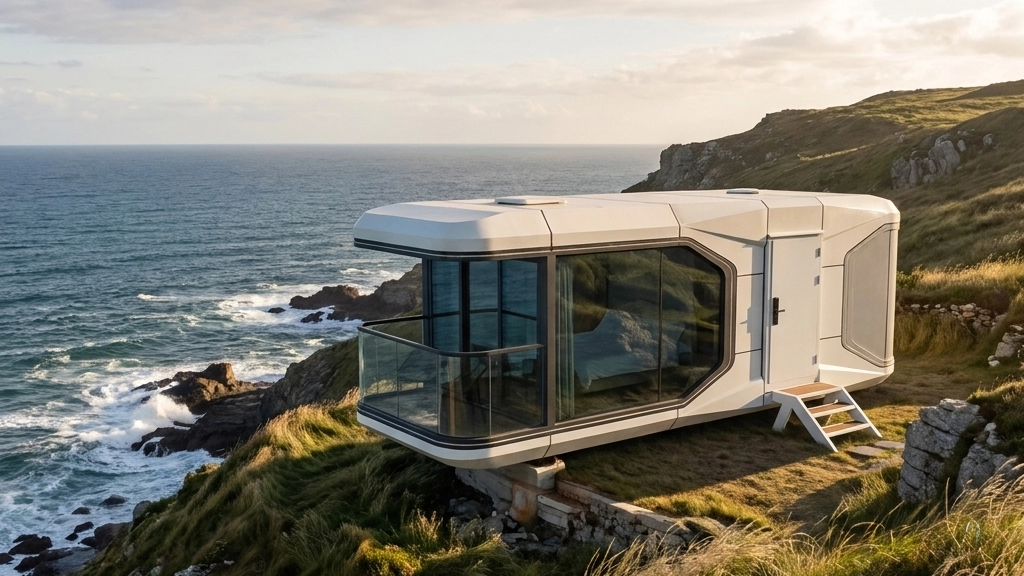
A capsule house is a factory-prefabricated modular accommodation unit designed as a self-contained guest room. Depending on the model, sleeping areas, bathroom, lighting, climate control, and interior finishes can be prepared in the factory before the unit is transported to the project site.
article3 (1)

1. M3 and M5: Compact Models for Resort Projects

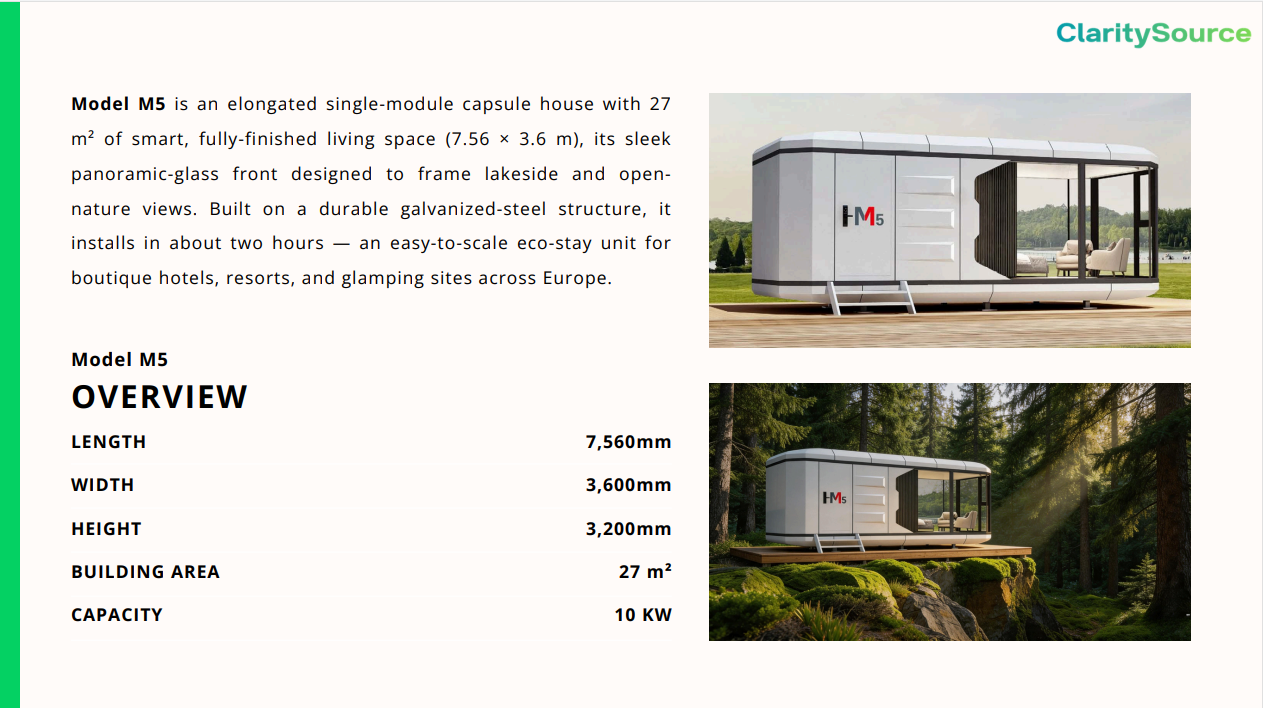
For projects where space and deployment efficiency matter, M3 and M5 are two models from our recommended manufacturing partner, ODGII.

The M3 provides 18㎡ of space and measures 5,120×3,600×3,200 mm, with one bedroom and one bathroom for two guests. It has a total power requirement of around 10kW.

The M5 is larger, with 27㎡ of space and dimensions of 7,560×3,600×3,200 mm. It is also designed for two guests, with one bedroom and one bathroom, offering more interior space while maintaining a compact footprint.

Both models can be configured for different project requirements. Kitchen modules and underfloor heating are available as options, while exterior colour can currently be customised without an additional charge.

article3 (4)

2. What Is a Capsule House Made Of?

The main structure uses hot-dip galvanized steel, with a fluorocarbon-coated aluminum exterior and Low-E double-layer glass. Depending on the model and specification, the interior can include bamboo fiber wall panels, aluminum ceiling panels, and SPC flooring, with polyurethane insulation for thermal performance.

Standard configurations can include air conditioning, fresh-air ventilation, a complete bathroom, water heater, electrical and plumbing systems, and electric curtain tracks.

For outdoor hospitality projects, these specifications need to be considered alongside the site’s climate and operating conditions, particularly for projects in colder, humid, coastal, or mountainous locations.

article3 (2)

3. How Are Capsule Houses Transported and Installed?

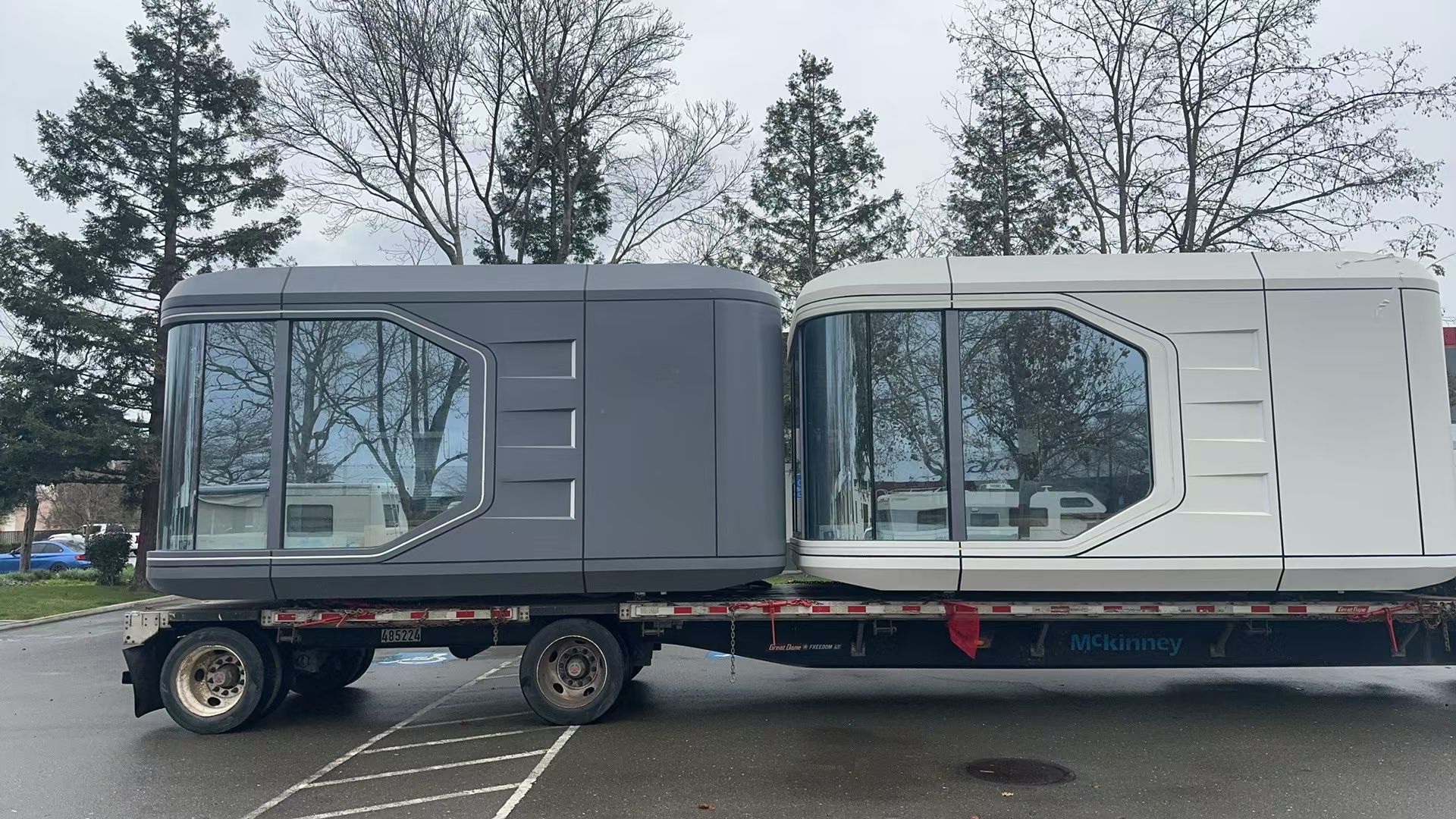
The unit is largely completed before shipment. At the destination, the site needs prepared concrete foundation points, water, electricity, sewage connections, and sufficient space for crane access.

Depending on the model, the unit weighs around 6–10 tons for lifting, and a crane of at least 25 tons is recommended. The local crane is arranged by the buyer.

With the foundation and utilities prepared in advance, the current installation process can be completed by around 4–5 people in 1–2 days. Installation manuals and videos are provided before delivery.

Transportation also needs to be considered at the planning stage. Container loading varies by model; as a current reference, the M7 can load 2 units in one 40HQ container. Ocean freight depends on the destination and shipping conditions. For Spain, the current reference is approximately EUR 4,600–5,500 per 40HQ container.

article3 (2)

4. What Does Our Capsule House Cost?

Current indicative EXW prices are: (cover the unit with necessary fittings and system, furniture is not included)

  • M5: From EUR 19,000 EXW
  • M7: From EUR 21,250–22,500 EXW
  • Kitchen module: about EUR 875–1,000

These are reference prices rather than final quotations. The final project cost will depend on the selected model, configuration, order quantity, shipping terms, destination, and local installation requirements.

Production typically takes around 25–30 days. For overseas projects, buyers should also allow time for ocean freight, customs clearance, local transportation, site preparation, and installation.

article3 (1)

For a hospitality project, the value of a capsule house comes down to more than its appearance. Size, materials, configuration, transportation, installation, and total project cost all need to work together.

ClaritySource helps hospitality buyers source and evaluate prefab accommodation from China, from product selection and supplier review to production follow-up, inspection, and logistics coordination.

Leave a Comment

Your email address will not be published. Required fields are marked *